Stomach Cramps vs. The 7-Day Abscess Threat: What Normal Appendectomy Recovery Actually Feels Like (Day-by-Day)
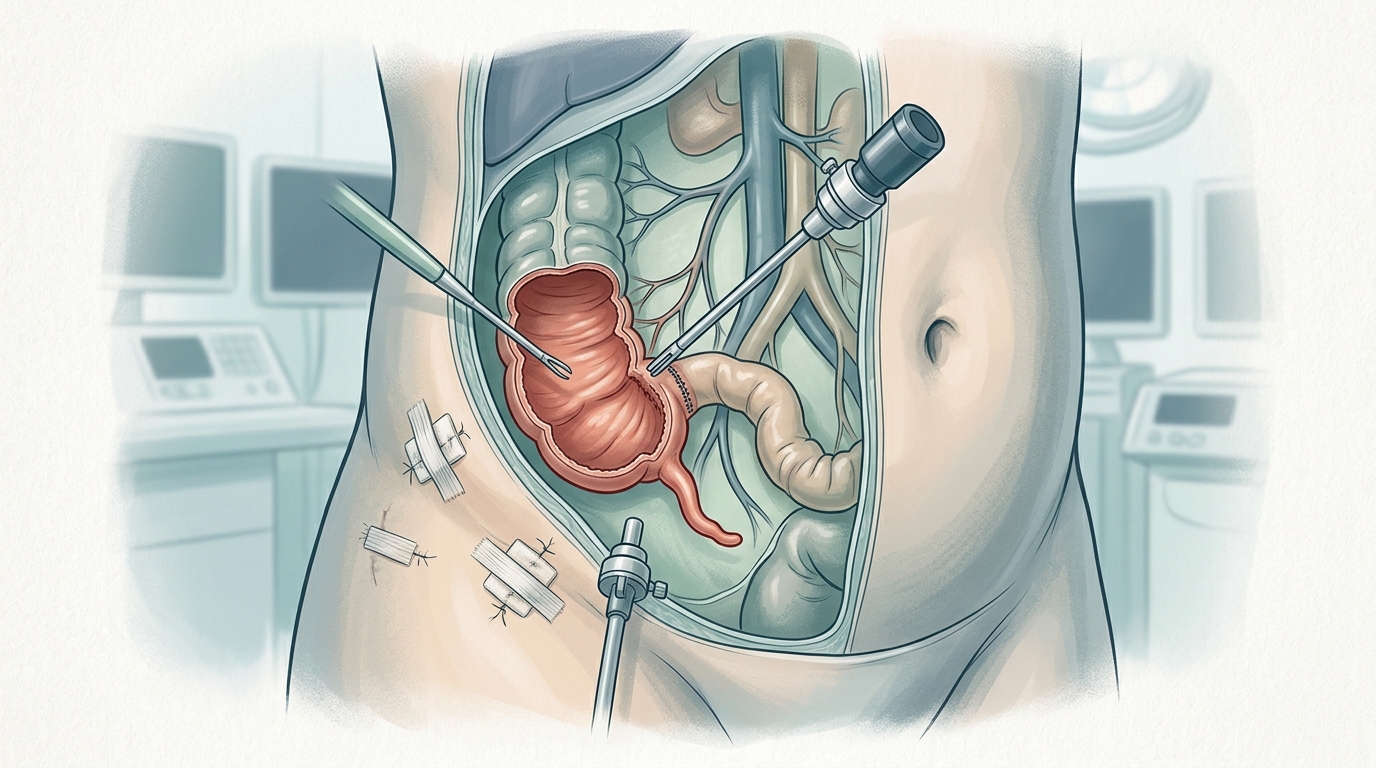
Mild migrating cramps, bloating, and intestinal gurgling between Days 2 and 5 are normal physiological symptoms of your intestines awakening (post-op ileus) and typically improve upon passing gas. In contrast, a secondary intra-abdominal abscess strikes between Day 5 and Day 10, characteristically presenting with a sudden clinical relapse: spiking fever (>101.0°F), severe localized right lower quadrant pain, and persistent watery diarrhea caused by inflammatory fluid irritating the rectal wall.
The Abrupt Shock of Emergency Surgery: Healing on Short Notice
Unlike an elective hernia repair or cosmetic procedure where patients spend weeks mentally preparing and reading surgical brochures, an appendectomy strikes without warning. One afternoon you are working at your desk, and by midnight you are under general anesthesia having your vermiform appendix excised from the base of your cecum.
When you wake up at home 24 hours later, every gurgle, twinge, and cramp feels alarming. Because acute appendicitis involves bacterial inflammation, knowing what a healthy postoperative trajectory looks like—and identifying the hidden 5-to-10 day complication window—is critical for your safety.
Simple vs. Perforated Appendicitis: The Biological Difference
How your body heals depends directly on the surgical pathology report generated in the operating room:
- Uncomplicated (Suppurative / Catarrhal) Appendicitis: The appendiceal lumen was obstructed (often by a calcified fecalith or lymphoid hyperplasia), causing localized bacterial overgrowth. However, the outer serosal wall remained intact without rupture. Contamination was confined. Operative time is approximately 25 to 45 minutes, peritoneal lavage is minimal, and tissue trauma is light. Discharge within 12 to 24 hours is standard [PMID: 32669111].
- Complicated (Gangrenous / Perforated) Appendicitis: Intraluminal ischemia led to tissue necrosis and perforation. Purulent exudate, foul bacterial fluids, and fecaliths escaped into the sterile peritoneal cavity, causing local peritonitis. Surgeons must perform extensive suction and warm saline irrigation. Recovery takes twice as long, requiring multi-day broad-spectrum antibiotic therapy (e.g., ceftriaxone + metronidazole or amoxicillin-clavulanate) and carry a 5-to-15% risk of secondary intra-abdominal abscess formation [PMID: 14685102].
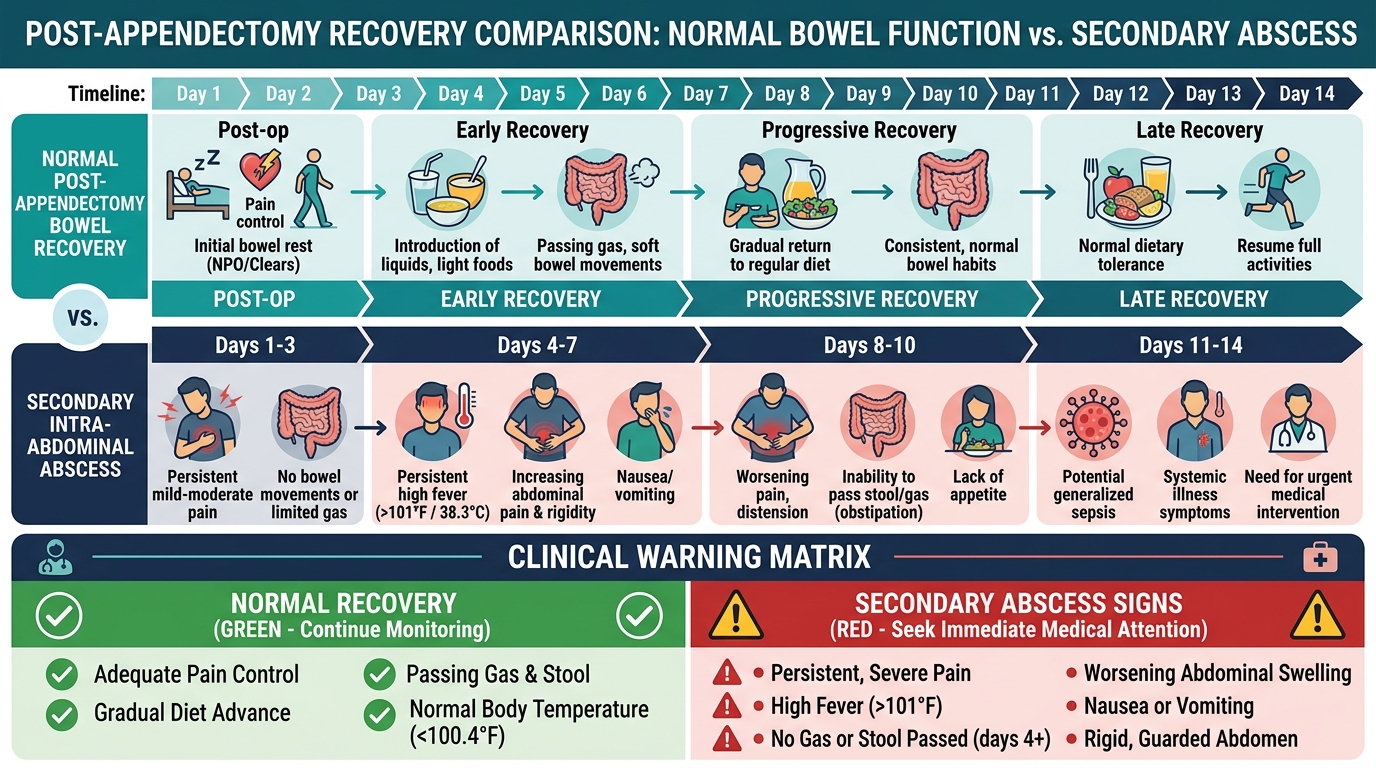
Figure 1: Comprehensive clinical matrix comparing normal bowel motility recovery against the warning signs of a secondary intra-abdominal abscess.
Why Does My Stomach Cramp? Understanding Post-Op Ileus
Between Day 2 and Day 5, nearly 80% of appendectomy patients complain of sharp, crampy, rolling stomach aches that travel across their abdomen. Patients often worry their appendicitis pain has returned.
In reality, this is post-operative paralytic ileus resolving. During surgery, direct handling of the cecum, peritoneal CO2 insufflation, and anesthetic agents temporarily stun the autonomic myenteric plexus of the bowel wall, shutting down smooth muscle contractions.
As bowel motility awakens between Day 2 and Day 4, peristaltic waves begin pushing trapped gas and stagnant secretions forward. Because the intestinal lumen is sluggish, gas pockets stretch the bowel wall, triggering visceral pain receptors. The definitive clue that your cramps are benign is that they ease significantly immediately after passing flatus or having a bowel movement.
The 5-to-10 Day Secondary Abscess Threat: What to Watch For
The most critical complication after appendectomy is the development of an intra-abdominal or pelvic abscess. During a perforated or inflamed case, microscopic bacteria and inflammatory debris can settle in dependent anatomical valleys—most commonly the pouch of Douglas (rectovesical/rectouterine pouch) or the right paracolic gutter.
Your body attempts to wall off these bacteria with fibrin, creating a localized pocket of purulence. This process takes several days to mature, which is why an abscess virtually never presents on Day 1 or 2. Instead, it strikes like clockwork between Day 5 and Day 10.
The classic clinical presentation is a "secondary deterioration":
- The patient feels great on Days 1 through 4, tolerating soft foods and ambulating well.
- Suddenly, between Day 5 and Day 8, they experience a relapse of deep, dull, aching pain in the right lower abdomen or deep pelvis.
- A low-grade spiking fever develops (>100.8°F to 102.0°F / 38.2°C to 38.9°C), typically rising in the late afternoon.
- The Pelvic Diarrhea Clue: If the abscess rests in the pelvis, the inflammatory inflammatory mass presses directly against the anterior wall of the rectum. This causes continuous tenesmus (a false urge to evacuate) and frequent, watery, mucous-laden diarrhea [PMID: 21751060].
The Day-by-Day Appendectomy Healing Matrix
| Recovery Period | Permitted Daily Activities | Prohibited Actions & Restrictions | Clinical Progress Indicator |
|---|---|---|---|
| Days 1 – 3 | Walking 5–10 min/hr; clear liquids progressing to bland soft foods (soup, rice, eggs); oral hydration. | Lifting >10 lbs, driving, taking baths, consuming greasy/spicy foods, taking NSAIDs on empty stomach. | Passage of bowel flatus; weaning off opioid narcotics to acetaminophen/ibuprofen; CO2 shoulder gas peak. |
| Days 4 – 7 | Walking 20–30 minutes, light desk computer work, normal bathing (gentle shower only, pat dry). | Lifting >15 lbs, vacuuming, pushing lawn mowers, vigorous jogging, swimming pools. | First soft bowel movement; resolution of laparoscopic shoulder gas; peak window for pelvic abscess surveillance. |
| Weeks 2 – 3 | Return to driving (if off narcotics and can emergency brake); brisk walking; light low-impact gym cycling. | Heavy compound weightlifting (squats, deadlifts), core crunches, contact athletics. | Deep fascial closure at the umbilicus achieves approximately 40% tensile strength; skin incisions re-epithelialize. |
| Weeks 4 – 6 | Full resumption of gym workouts, running, manual labor, swimming pools, and hot tubs (after clearance). | Attempting maximum weight lifts without prior progressive core conditioning. | Fascial remodeling plateaus (~80% native tissue strength); deep peritoneal inflammation fully resolved. |
Activity Limits: The 10-Pound Lifting Rule & The Umbilicus
In laparoscopic appendectomy, the largest incision is virtually always placed inside or immediately below the belly button (umbilicus). This 10mm to 12mm port is where surgeons introduce the laparoscopic camera and extract the infected appendix in an impermeable specimen bag.
Because the umbilicus is a natural anatomical weak point in the linea alba where all four abdominal muscular aponeuroses converge, it is vulnerable to developing an incisional trocar hernia if loaded prematurely. Follow the strict 10-pound rule:
- Weeks 1 to 3: Lift nothing heavier than a gallon of water (approx. 8–10 lbs). Do not lift laundry baskets, carry toddlers, or move heavy grocery bags.
- Squat, Do Not Bend: If you must pick something up off the floor, keep your back completely vertical, bend your knees, and use your quadriceps and gluteal muscles to lift.
Returning to Work, Driving, and Sexual Activity
1. Driving Clearance
Do not drive while taking prescription narcotic pain relievers. Opioids impair cognitive processing and reaction time. Once off narcotics for 48 hours, sit in your parked vehicle and stomp down on the brake pedal. If you can depress the pedal forcefully without hesitation or sharp lower right abdominal pain, you are safe to drive (typically between Day 5 and Day 7).
2. Returning to Work or School
- Students and Office Workers: May return to classes or remote/desk work within 5 to 7 days, provided they take frequent walking breaks.
- Manual Workers & Trades: Individuals working in construction, warehousing, or manufacturing must remain on modified light duty for a minimum of 3 to 4 weeks for uncomplicated cases, and 6 weeks for perforated cases.
3. Sexual Activity
Sexual intercourse is generally safe to resume after 10 to 14 days for uncomplicated appendectomies, provided you experience zero pain during everyday walking and adopt gentle positions that place zero direct weight or shear force across your lower abdomen.
Peer-Reviewed Scientific References & Clinical Guidelines
- Di Saverio, S., et al. (WSES). (2020). 2020 update of the WSES Jerusalem guidelines for diagnosis and treatment of acute appendicitis. World Journal of Emergency Surgery, 15(1), 27. [PubMed PMID: 32669111].
- Society of American Gastrointestinal and Endoscopic Surgeons (SAGES). (2009). Guidelines for laparoscopic appendectomy. Surgical Endoscopy, 24(4), 757–761. [PubMed PMID: 19890695].
- Guller, U., et al. (2004). Laparoscopic versus open appendectomy: outcomes comparison based on a large administrative database of 43,799 patients. Annals of Surgery, 239(1), 43–52. [PubMed PMID: 14685102].
- Sartelli, M., et al. (2018). 2017 WSES guidelines for the management of intra-abdominal infections. World Journal of Emergency Surgery, 12, 29. [PubMed PMID: 28702073].
- Jaspers, N. E., et al. (2019). Intra-abdominal abscess after appendectomy: a systematic review and meta-analysis. International Journal of Colorectal Disease, 34(7), 1171–1181. [PubMed PMID: 31175402].
- Vaughn, Z. D., et al. (2011). Driving performance after right lower extremity surgical procedures. The American Journal of Sports Medicine, 39(12), 2686–2690. [PubMed PMID: 21908722].
- van Rossem, C. C., et al. (2016). Antibiotic duration for complicated appendicitis: a systematic review. World Journal of Surgery, 40(9), 2095–2103. [PubMed PMID: 27129525].
- Cobb, W. S., et al. (2005). Normal human intra-abdominal pressure. Journal of Surgical Research, 129(2), 231–235. [PubMed PMID: 16187042].
- Heniford, B. T., et al. (2003). Laparoscopic repair of ventral hernias: nine years' experience with 850 consecutive hernias. Annals of Surgery, 238(3), 391–400. [PubMed PMID: 14501505].
- National Institutes of Health (NIH). (2021). Appendicitis: Diagnosis, Treatment, and Surgical Aftercare. National Institute of Diabetes and Digestive and Kidney Diseases. NIH Publication No. 18-DK-4589.
- Centers for Disease Control and Prevention (CDC). (2017). Guideline for Prevention of Surgical Site Infection. JAMA Surgery, 152(8), 784–791. [PubMed PMID: 28467526].
- Markar, S. R., et al. (2012). Laparoscopic versus open appendectomy for complicated appendicitis in adults: meta-analysis. World Journal of Surgery, 36(9), 2026–2037. [PubMed PMID: 22562453].
- Alexander, J. I. (1997). Pain after laparoscopy. British Journal of Anaesthesia, 79(3), 369–378. [PubMed PMID: 9449557].