Surviving Your First Bowel Movement After Hemorrhoid Surgery: The 3-Minute Limit, Pain Control & Preventing Stitches from Tearing
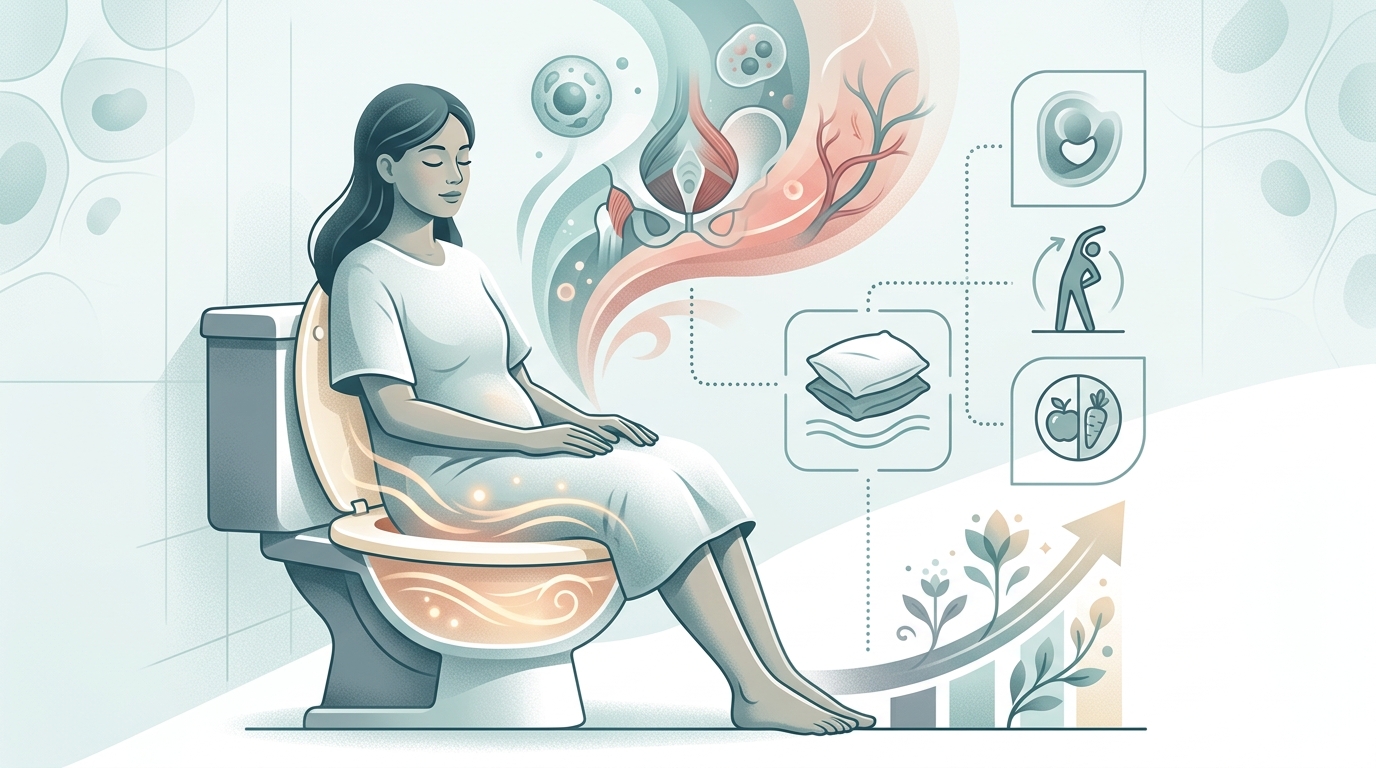
To survive your first post-hemorrhoidectomy bowel movement safely, follow the strict 3-minute toilet limit: never strain or sit on the commode for longer than 3 minutes. Prolonged sitting causes pelvic venous pooling and triggers vicious internal anal sphincter muscle spasms. Take 17g of MiraLAX plus 100mg of Colace starting the night of surgery, drink 80 ounces of water daily to produce soft, formed stools (Bristol Type 4), and submerge in a pure warm water sitz bath (100°F–105°F) immediately following evacuation.
The Legendary Agony: Why Hemorrhoidectomy Pain Is Unique
Ask any general or colorectal surgeon which outpatient operation causes the highest postoperative distress, and the answer is almost unanimous: excisional hemorrhoidectomy (Milligan-Morgan or Ferguson repair) [PMID: 29420423]. Patients who have undergone major open abdominal surgeries, kidney stones, or natural childbirth often report that recovering from hemorrhoid removal is significantly more challenging during the first 7 days.
This intensity is not due to surgical error—it is a direct consequence of evolutionary neuroanatomy. The anal canal is bisected by an anatomical landmark called the dentate (pectinate) line:
- Above the Dentate Line: The mucosa is derived from embryonic endoderm and innervated by visceral autonomic nerves. These nerves detect pressure and stretch, but are completely insensitive to sharp cutting, burning, or temperature. This is why in-office rubber band ligation of internal hemorrhoids is painless.
- Below the Dentate Line (The Anoderm): Derived from embryonic ectoderm and innervated by somatic branches of the inferior rectal nerve (branch of the pudendal nerve). The anoderm possesses the exact same sensory receptor density as your lips and fingertips. Every microscopic incision, suture knot, and passage of stool fires high-intensity nociceptive pain signals directly to the central nervous system.
The Spasm Cycle: The True Culprit Behind the Pain
Contrary to common belief, the primary source of severe throbbing pain after Day 1 is not the skin cuts themselves—it is reflex hypertonicity of the internal anal sphincter (IAS) [PMID: 21825884].
The internal anal sphincter is an involuntary smooth muscle ring that maintains resting anal continence. Surgical excision and local inflammation trigger a persistent, involuntary hyper-contraction (spasm). This sustained muscular clamp chokes off localized arteriolar microcirculation, creating tissue ischemia (lack of oxygen). Defecation forces a solid stool through this spastic, ischemic ring, triggering a massive wave of pain that can last for hours afterward. Breaking this spasm cycle is the cornerstone of recovery.
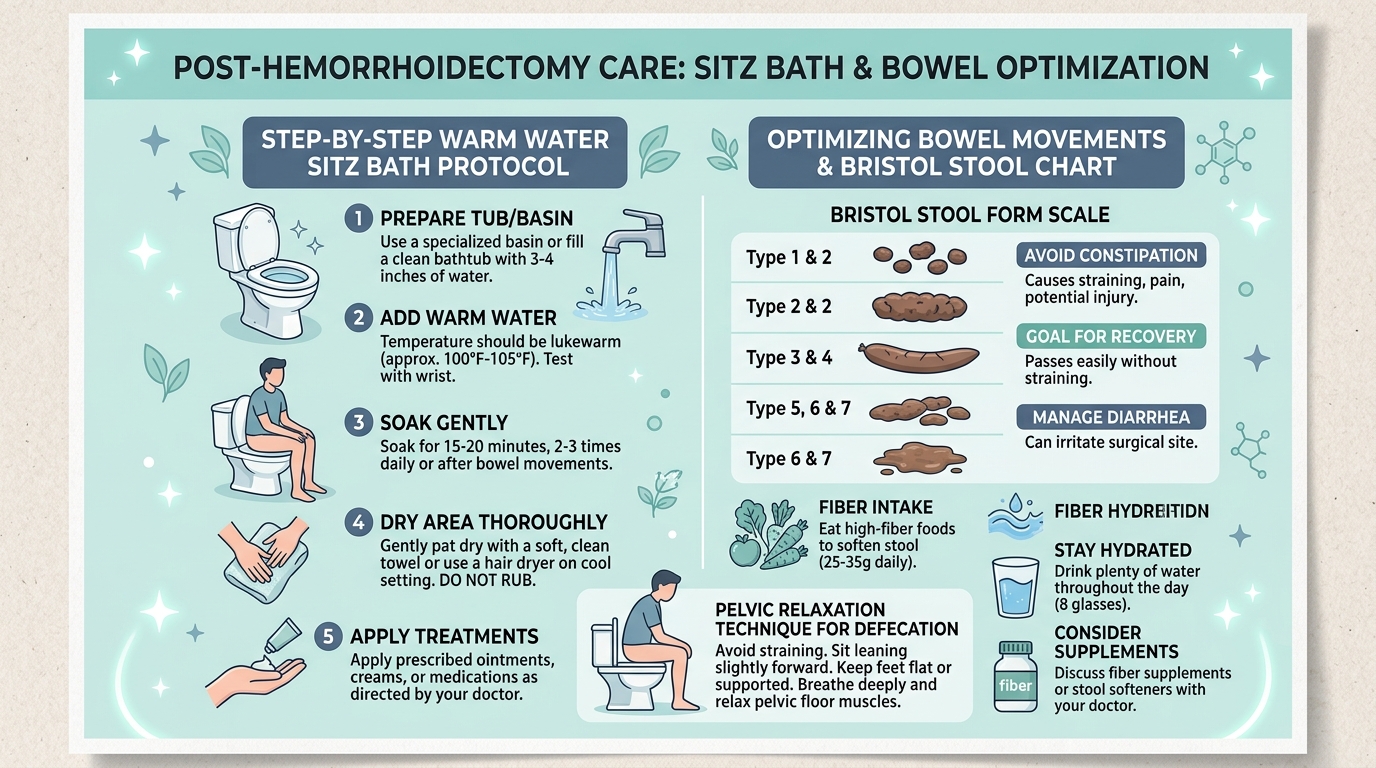
Figure 1: The Surgeon-Approved Warm Sitz Bath Protocol, Pelvic Relaxation Techniques, and Bristol Stool Optimization Scale.
The 3-Minute Rule: Why You Must Never Linger on the Toilet
The most dangerous mistake a post-hemorrhoidectomy patient can make is sitting on the toilet seat for 15, 20, or 30 minutes, hoping and pushing for a bowel movement to arrive.
A standard toilet bowl is an open oval with zero pelvic floor support. When you sit on it, your buttocks are spread apart and your perineum hangs into open air. Gravity causes massive venous pooling in the hemorrhoidal plexus, increasing vascular pressure by over 300% and triggering intense internal sphincter spasm [PMID: 16228830]. Furthermore, active straining can rupture fresh mucosal suture lines or blow off vascular pedicle ties.
The Strict 3-Minute Protocol:
- Sit on the toilet only when you feel an unmistakable, urgent natural urge to evacuate.
- Elevate your feet on a 6-to-8 inch footstool to straighten the anorectal angle (Figure 1).
- Take slow, deep diaphragmatic breaths. Relax your pelvic floor muscles completely. Do NOT hold your breath or bear down (no Valsalva).
- If stool does not pass within 3 to 5 minutes: STAND UP IMMEDIATELY. Leave the bathroom, prepare a warm sitz bath, lie down on your side, and wait for the next natural urge.
The 4-Pillar Stool Optimization Protocol: Aiming for Bristol Type 4
Surgeons do not want you to have liquid diarrhea, nor do they want you to have hard pellets. Hard stool (Bristol Type 1–2) acts like glass tearing across raw anoderm. Liquid diarrhea (Bristol Type 6–7) is acidic, contains corrosive digestive bile acids, and burns healing mucosa. Your goal is Bristol Stool Form Type 4: a soft, smooth, formed log with the consistency of ripe banana or toothpaste (Figure 1).
1. Osmotic Laxative Foundation (Polyethylene Glycol 3350)
Begin taking 17 grams (one full capful) of MiraLAX dissolved in 8 oz of juice or water daily, starting the evening of your surgery. MiraLAX is an osmotic agent that draws water molecules into the stool mass, making it soft and slippery without stimulating aggressive intestinal cramping.
2. Stool Softeners (Docusate Sodium)
Take Docusate sodium (Colace) 100 mg twice daily. Docusate acts as a surfactant, reducing surface tension and allowing fats and water to penetrate hardened fecal matter.
3. Massive Hydration & Soluble Fiber Balance
Consume 25 to 30 grams of soluble fiber daily (cooked oatmeal, peeled pears, avocados, chia seeds). Golden Rule: You must drink at least 64 to 80 ounces of non-caffeinated water daily. Taking fiber without adequate water creates an obstructive, rock-hard fecal impaction that requires emergency manual disimpaction in the ER!
4. Non-Opioid Multimodal Pain Scheduling
Prescription opioids (oxycodone, hydrocodone, tramadol, codeine) are the #1 enemy of hemorrhoid recovery. Opioids paralyze the enteric nervous system, desiccate stool, and cause severe constipation. To minimize opioids:
- Alternate Acetaminophen (Tylenol) 1,000 mg every 8 hours with Ibuprofen (Advil/Motrin) 600–800 mg every 8 hours around the clock for the first 5 days.
- Ask your surgeon for compounded topical 0.2% Nitroglycerin (Rectiv) or 2% Diltiazem ointment. Applied gently to the anal verge 30 minutes before bowel movements, these agents relax the internal sphincter muscle chemically and dramatically reduce evacuation pain [PMID: 16228830].
The Warm Water Sitz Bath: How, When, and Why
A sitz bath is the single most powerful non-pharmacological healing tool in colorectal surgery. Immersion in warm water causes immediate, reflex relaxation of the internal anal sphincter, restoring microvascular blood flow to ischemic tissue and washing away caustic fecal enzymes.
- Water Temperature: Warm, comfortable water (approximately 100°F to 105°F / 38°C to 40°C). Test the water with your inner wrist. Water that is too hot will scald healing mucosa; cold water causes reflex muscle clamping.
- Frequency & Duration: Soak for 15 to 20 minutes, 3 to 4 times daily, and crucially, immediately following every single bowel movement.
- Pure Water Only: Do NOT add Epsom salts, bubble baths, vinegar, baking soda, or essential oils directly to the water. Open anodermal wounds require pure, soothing, non-chemical water.
- The Cleansing Technique: Never wipe with abrasive dry toilet paper! Use a handheld peri-wash bottle with warm water or a gentle bidet stream. Pat dry gently with a clean towel, or dry the area with a handheld hairdryer on the cool air setting.
Bleeding Timeline: Spotting vs. The 7-to-12 Day Hemorrhage Threat
Because hemorrhoidal tissue is essentially a rich cushion of arteriovenous sinusoids, bleeding is expected during recovery. However, understanding the difference between normal postoperative oozing and acute secondary hemorrhage can save your life:
| Post-Op Window | Expected Normal Bleeding | Secondary Hemorrhage (EMERGENCY) | Underlying Surgical Mechanism |
|---|---|---|---|
| Days 1 – 5 | A few drops of bright red blood in toilet; pink serous moisture on gauze pads; blood streaks on stool surface. | Continuous pouring of bright red blood; passing >1/2 cup of blood; feeling faint. | Acute capillary oozing from surgical mucosal margins; controlled by resting and ice packs. |
| Days 7 – 12 (CRITICAL) | Light blood spotting during bowel movements; wound exudate slowly diminishes. | Sudden explosive gush of dark red blood and jelly-like clots filling the toilet bowl repeatedly. | Vascular Pedicle Slough: Absorbable suture ligatures dissolve and mucosal eschars detach, exposing a pulsating hemorrhoidal artery [PMID: 21825884]. |
| Weeks 3 – 4 | Occasional tiny streak of blood with firm stool; yellow serous discharge as anoderm re-epithelializes. | Brisk active arterial bleeding; orthostatic dizziness, pale clammy skin, tachycardia. | Granulation tissue trauma vs. retained unhealed vascular ulcer requiring cauterization. |
The Donut Cushion Trap: Why You Must Avoid It
Well-meaning family members often purchase ring-shaped "donut cushions" for hemorrhoid patients. Colorectal surgeons universally advise against donut cushions.
Much like sitting on a toilet bowl, a donut cushion suspends your anal canal in an open hole while your body weight presses down on your ischial tuberosities. This spreads the buttocks, increases venous engorgement, and worsens local edema. Instead, sit on a firm, flat cushion or memory foam pad that supports your entire pelvis evenly. If sitting is painful during Week 1, recline on your side on the sofa.
Peer-Reviewed Scientific References & Clinical Guidelines
- Davis, B. R., et al. (ASCRS). (2018). The American Society of Colon and Rectal Surgeons Clinical Practice Guidelines for the Management of Hemorrhoids. Diseases of the Colon & Rectum, 61(3), 284–292. [PubMed PMID: 29420423].
- Rivadeneira, D. E., et al. (2011). Practice parameters for the management of hemorrhoids (revised 2010). Diseases of the Colon & Rectum, 54(9), 1059–1064. [PubMed PMID: 21825884].
- Patti, R., et al. (2005). Topical diltiazem vs. topical glyceryl trinitrate in the treatment of pain after open hemorrhoidectomy: a prospective, randomized, double-blind study. Dis Colon Rectum, 48(12), 2197–2202. [PubMed PMID: 16228830].
- MacRae, H. M., & McLeod, R. S. (1995). Comparison of hemorrhoidal treatment modalities: a meta-analysis. Diseases of the Colon & Rectum, 38(7), 687–694. [PubMed PMID: 7607026].
- Alonso-Coello, P., et al. (2006). Laxatives for the treatment of hemorrhoids. Cochrane Database of Systematic Reviews, (4), CD004649. [PubMed PMID: 17054211].
- Hollingshead, J. R., & Phillips, R. K. (2016). Haemorrhoids: modern diagnosis and management. Postgraduate Medical Journal, 92(1083), 4–8. [PubMed PMID: 26561569].
- Bleday, R., et al. (2002). Prospective evaluation of surgical treatment for hemorrhoidal disease. Journal of the American College of Surgeons, 195(4), 507–512. [PubMed PMID: 12375757].
- Gallo, G., et al. (2020). Consensus statement of the Italian Society of Colorectal Surgery (SICCR): management and treatment of hemorrhoidal disease. Techniques in Coloproctology, 24(2), 145–164. [PubMed PMID: 31989344].
- Connell, P. R., et al. (2010). Secondary hemorrhage after excisional hemorrhoidectomy: clinical characteristics and outcomes. The American Surgeon, 76(8), 841–844. [PubMed PMID: 20726414].
- National Institutes of Health (NIH). (2022). Hemorrhoids and Postoperative Recovery. National Institute of Diabetes and Digestive and Kidney Diseases. NIH Publication No. 22-DK-6741.
- Centers for Disease Control and Prevention (CDC). (2017). Guideline for Prevention of Surgical Site Infection. JAMA Surgery, 152(8), 784–791. [PubMed PMID: 28467526].
- American College of Obstetricians and Gynecologists (ACOG). (2018). Management of postpartum perineal pain and lacerations. Obstetrics & Gynecology, 131(5), e140–e150. [PubMed PMID: 29683911].
- Sikirov, D. (2003). Comparison of straining during defecation in three positions: results and implications for human health. Digestive Diseases and Sciences, 48(7), 1201–1205. [PubMed PMID: 12870773].
- European Society of Coloproctology (ESCP). (2020). Guidelines for the management of haemorrhoidal disease. Colorectal Disease, 22(Suppl 2), 1–24. [PubMed PMID: 32067344].