Can You Ruin Your Hernia Repair by Bending Over? The 10-Pound Rule, Safe Movement & Day-by-Day Timeline
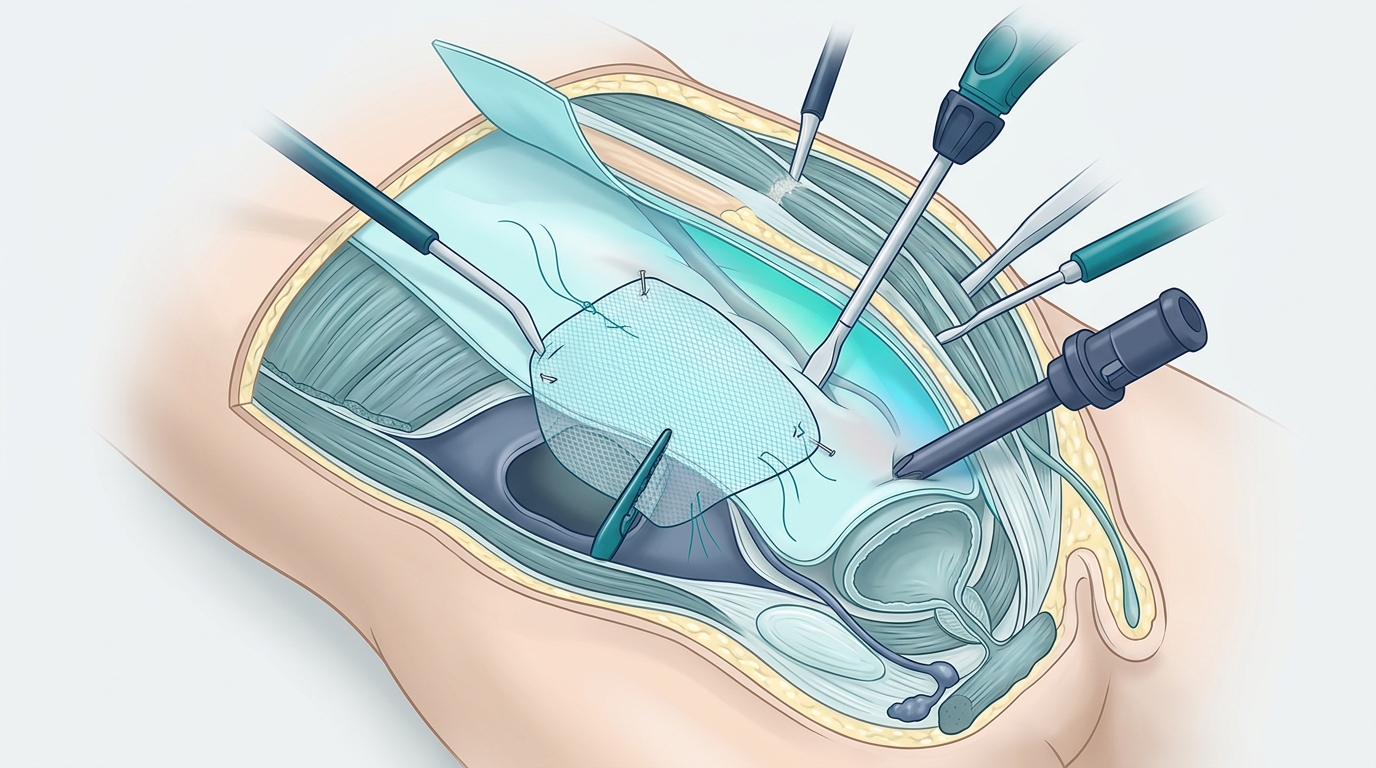
Bending at the waist will not dissolve your mesh, but bending forward during the first 2 to 3 weeks generates dangerous hydraulic pressure spikes (up to 150 mmHg) inside your abdominal cavity. This acute tension can shear mechanical fixation tacks, tear delicate transversalis fascia, and cause chronic fluid pockets (seromas). For the first 14 to 28 days, follow the strict 10-pound lifting rule: squat with your hips and knees to pick up light objects, never bend from the lumbar spine, and use the surgeon-approved log-roll technique to get in and out of bed.
The 2:00 AM Panic: "Did I Just Tear My Mesh?"
It happens in almost every patient’s recovery: you accidentally drop your phone on the floor, your dog lunges on its leash, or you sneeze violently while sitting on the sofa. Immediately, a sharp twinge radiates through your groin or belly button, followed by overwhelming dread: Did I just tear the surgical mesh? Did I ruin the repair?
As a practicing general and laparoscopic surgeon, this is the single most common phone call I receive from post-operative patients. The human abdominal wall is a dynamic, multi-layered muscular cylinder. Understanding the biomechanics of how synthetic mesh fuses with your living tissue is the key to conquering this recovery anxiety.
The Biology of Healing: What Actually Holds Your Hernia Together?
Modern hernia repairs—whether performed via minimally invasive laparoscopy (TAPP/TEP), robotic surgery, or open incisions—are designed as tension-free repairs. Decades of surgical evidence have proven that pulling weakened muscle edges together under tension results in failure rates exceeding 30% [PMID: 12844883]. Synthetic prostheses (such as polypropylene or polyester mesh) solve this problem by bridging the anatomical defect without pulling tissue taut.
However, the mesh does not instantly glue itself to your abdominal wall. Healing occurs through three distinct, overlapping biological phases:
- Phase 1: The Frictional & Mechanical Fixation Phase (Days 1 to 7): During the first week, the mesh is held in position solely by friction against preperitoneal tissues and your surgeon's fixation devices—either titanium or absorbable synthetic tacks, permanent polypropylene sutures, or liquid cyanoacrylate tissue glues. The native tissue holding power is less than 10% of baseline [PMID: 29379841].
- Phase 2: The Fibroblastic Infiltration Phase (Weeks 2 to 6): Platelets and macrophages release transforming growth factor-beta (TGF-β), signaling host fibroblasts to migrate into the porous mesh pores. These cells deposit a vascular extracellular matrix composed predominantly of immature Type III collagen. Fascial burst strength climbs to approximately 30% to 50%.
- Phase 3: The Collagen Cross-Linking & Remodeling Phase (Months 2 to 6+): Matrix metalloproteinases (MMPs) orchestrate the enzymatic turnover of weak Type III collagen into dense, high-tensile Type I collagen bundles. These fibrils form strong covalent cross-links, physically incorporating the mesh into your abdominal wall as a permanent composite structure with 80% or more of natural fascial strength [PMID: 20490558].
Why Bending Over Is Dangerous: The Hydraulic Pressure Spike
Normal resting intra-abdominal pressure (IAP) ranges between 5 and 7 mmHg in a relaxed supine adult. When you bend over at the waist with straight legs, two mechanical phenomena occur simultaneously:
- Visceral Hydraulic Piston Effect: Gravity forces your stomach, colon, and small intestine forward against the anterior abdominal wall. Bending forward compresses the abdominal cavity, driving IAP spikes to 80–150 mmHg [PMID: 16187042].
- Fascial Shear Strain: The rectus abdominis and oblique musculature elongate and stretch. Because the prosthetic mesh is inelastic compared to biological muscle, this stretching creates intense shear stresses along the fixation margin—risking tack pull-out or peritoneal tearing.
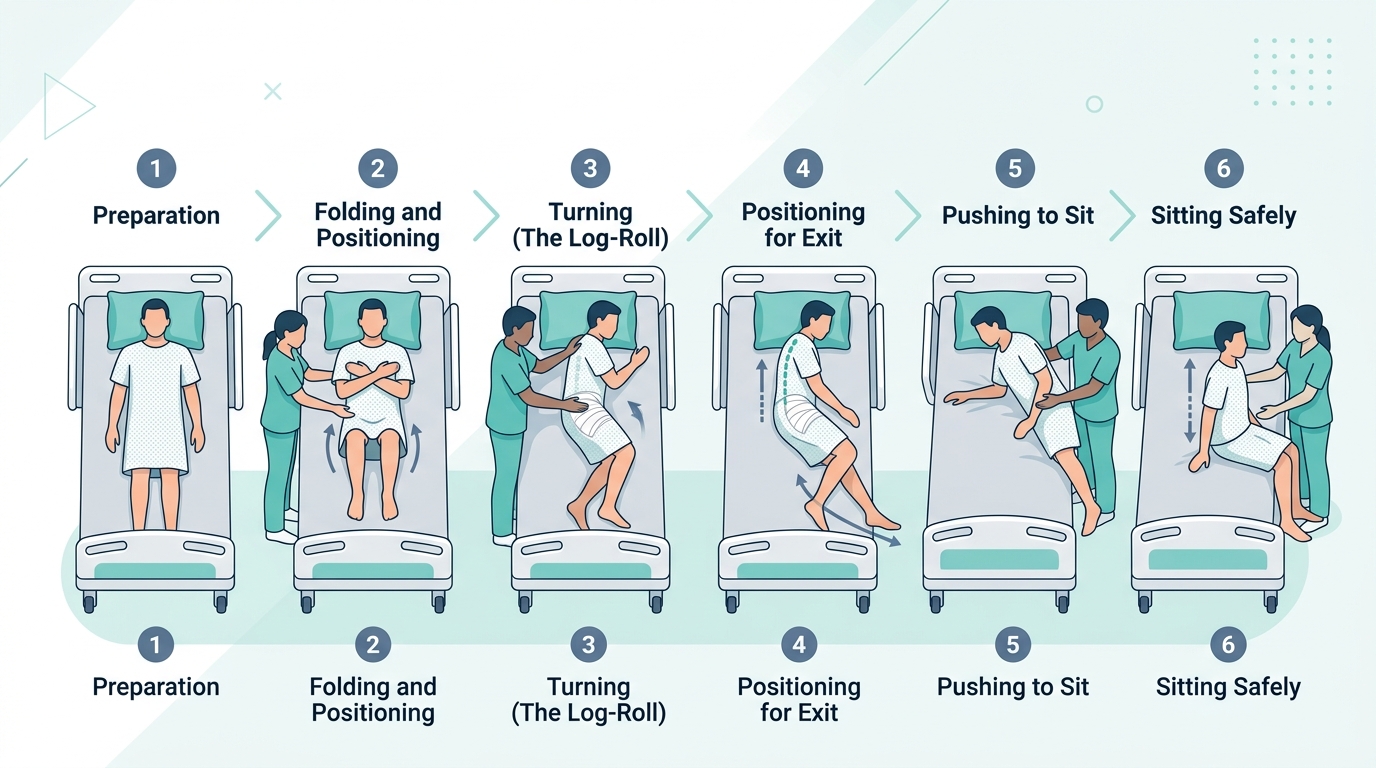
Figure 1: The 6-Stage Log-Roll Technique to protect abdominal wall tacks and prevent intra-abdominal pressure spikes.
The Log-Roll Technique: How to Exit Bed Without Straining
The most hazardous movement of your entire day is sitting straight up in bed like doing a gym crunch. Doing a crunch engages the rectus abdominis with maximum force, directly testing your fresh surgical fixation. Instead, use the 6-stage clinical Log-Roll Method shown in Figure 1:
- Stage 1 (Preparation): Lie flat on your back and take two slow diaphragmatic breaths to relax your pelvic and abdominal muscles.
- Stage 2 (Folding & Positioning): Gently bend both knees, placing your feet flat on the mattress. Cross your arms over your chest or gently hug a soft pillow to your abdomen.
- Stage 3 (The Log-Roll Turn): Roll your shoulders, torso, and hips together as a single rigid unit onto your non-operative side. Do not twist your spine or leave your hips behind.
- Stage 4 (Positioning for Exit): Shift your legs until your knees and lower legs hang over the edge of the mattress.
- Stage 5 (Arm Push): Use your top hand on the mattress and your bottom forearm to push your upper body upward into a seated position. Your abdominal muscles must remain completely soft and inactive.
- Stage 6 (Sitting Safely): Rest in the seated position for 30 to 45 seconds to allow your blood pressure to normalize before standing up slowly.
The Comprehensive Day-by-Day Activity & Restriction Matrix
| Timeline | Permitted Physical Activities | Strictly Forbidden Actions | Underlying Clinical Milestone |
|---|---|---|---|
| Days 1 – 3 | Flat-surface walking (5–10 min every hour awake), ankle pumps in bed, log-roll transfers, light standing. | Bending at the waist, lifting >10 lbs, driving, pushing during bowel movements, carrying children. | Acute fibrin clot formation; fixation tacks carry 100% of the shear load; native fascial strength <10%. |
| Days 4 – 7 | Walking 15–30 minutes, climbing stairs one step at a time, light sedentary computer desk work. | Vacuuming, lifting laundry baskets, mowing the lawn, fast walking, core abdominal twisting. | Early fibroblastic migration; acute post-op inflammatory seroma reaches maximum volume. |
| Weeks 2 – 3 | Driving (if off narcotics and can emergency-brake), stationary cycling (zero resistance), lifting up to 15 lbs. | Heavy compound weightlifting, abdominal planks/crunches, jogging, direct impact athletics. | Type III collagen deposition underway; fascial tensile strength reaches approximately 30–40%. |
| Weeks 4 – 6 | Brisk outdoor walking, low-impact elliptical training, progressive lifting up to 25–30 lbs. | Maximal Olympic weightlifting, heavy squats, deadlifts, competitive contact sports. | Transition from Type III to structural Type I collagen cross-linking; burst resistance reaches ~60%. |
| Week 7+ | Full resumption of gym workouts, running, heavy manual construction labor (after clinical sign-off). | Attempting one-rep max lifts without prior progressive core and muscular reconditioning. | Mature collagen remodeling plateau reached (~80% of native abdominal wall strength). |
The Valsalva Hazard: Preventing Post-Operative Constipation
Many patients obsess over lifting heavy objects but completely forget about straining on the toilet. Straining against a closed glottis (the Valsalva maneuver) spikes intra-abdominal pressure above 180 mmHg—higher than lifting a 30-pound dumbbell [PMID: 17562283]!
General anesthesia slows bowel smooth muscle peristalsis, and prescribed opioid analgesics (such as oxycodone, hydrocodone, and tramadol) severely paralyze colonic motility. To prevent severe fecal impaction:
- Osmotic Hydration: Begin taking 17 grams of Polyethylene Glycol 3350 (MiraLAX) dissolved in water daily starting the evening of surgery. Unlike stimulant laxatives, osmotic agents draw water into the colon without causing spastic cramping.
- Soluble Fiber Titration: Consume 25 to 30 grams of soluble fiber daily (oatmeal, chia seeds, stewed prunes, applesauce). Crucially, pair this with 64 to 80 ounces of water daily; fiber without water creates hard intestinal concrete.
- The Toilet Footstool: Place a small 6-inch stool (or Squatty Potty) under your feet while sitting on the toilet. Elevating your knees above your hips straightens the anorectal angle, allowing stool to slide out effortlessly through gravity alone without abdominal straining.
Driving, Returning to Work, and Sexual Activity
1. Driving Rules (The Emergency Brake Test)
To resume driving legally and safely in the United States, you must satisfy three medical criteria:
- You must be 100% free from all opioid pain medications for at least 48 consecutive hours. Driving under the influence of prescribed narcotics carries criminal DUI penalties and severe liability in the event of an accident.
- You must be able to twist your torso comfortably to check blind spots without sharp groin pain.
- The Clinical Floorboard Test: Sit in your parked car with the engine off. Stomp your right foot down on the brake pedal as hard and as fast as you would in a sudden emergency stop. If you hesitate, grimace, or feel acute groin pain, your reaction time is impaired and you are unsafe to drive [PMID: 21908722]. For most laparoscopic patients, driving is safe between Day 7 and Day 10; for open repairs, allow 14 to 21 days.
2. Returning to Work (Desk vs. Physical Labor)
- Sedentary / Remote Office Work: Patients may return to light desk employment between Day 5 and Day 7, provided they can stand and walk for 5 minutes every hour to prevent lower-extremity deep vein thrombosis (DVT).
- Moderate Physical Work (Nursing, Retail, Teachers): Requires 2 to 3 weeks before standing for full 8-hour shifts or moving light equipment.
- Heavy Manual Labor (Construction, Warehouse, Military): Requires a strict 6-week minimum limitation to prevent catastrophic tack pull-out before biological collagen cross-linking is complete.
3. Resuming Sexual Activity
Patients are understandably hesitant to ask their surgeon about intimacy. Gentle sexual activity is generally safe to resume after 14 days, provided:
- You experience zero pain during everyday brisk walking.
- You adopt passive, low-strain positions that place zero body weight or pressure on the healing groin or abdomen.
- Mild, temporary scrotal or testicular aching following ejaculation is common due to vas deferens manipulation and local inflammation; it resolves spontaneously over 2 to 4 weeks.
Normal Swelling vs. Seroma vs. True Hernia Recurrence
| Diagnostic Parameter | Post-Op Seroma (Benign) | Scrotal Ecchymosis (Normal) | True Recurrence (Failed Mesh) |
|---|---|---|---|
| Onset Time | Appears between Days 5 and 10 as tissue edema liquefies. | Appears between Days 3 and 7 post-op. | Can occur early if tacks tear, but more common after 3–12 months. |
| Consistency & Feel | Firm, rubbery, oval lump filling the old hernia pocket; mildly tender. | Diffuse discoloration; scrotum feels soft or mildly heavy, not rock-hard. | Soft, spongy protrusion; reproduces the exact sensation of original hernia. |
| Behavior When Supine | Remains firm and palpable even when lying completely flat. | Unaffected by posture; slowly fades from purple to yellow-green. | Disappears or reduces smoothly into the abdomen when lying flat. |
| Cough Impulse Test | Does NOT expand with coughing; fluid transmits a dull vibration. | No cough expansile impulse. | Expands and pops outward distinctly with coughing or Valsalva. |
| Surgeon's Plan | Observation only! Over 90% reabsorb naturally in 6–12 weeks [PMID: 20490558]. | Wear supportive scrotal briefs or jockstrap; ice 15 min every 3 hours. | Clinical examination and ultrasound/CT imaging to evaluate mesh position. |
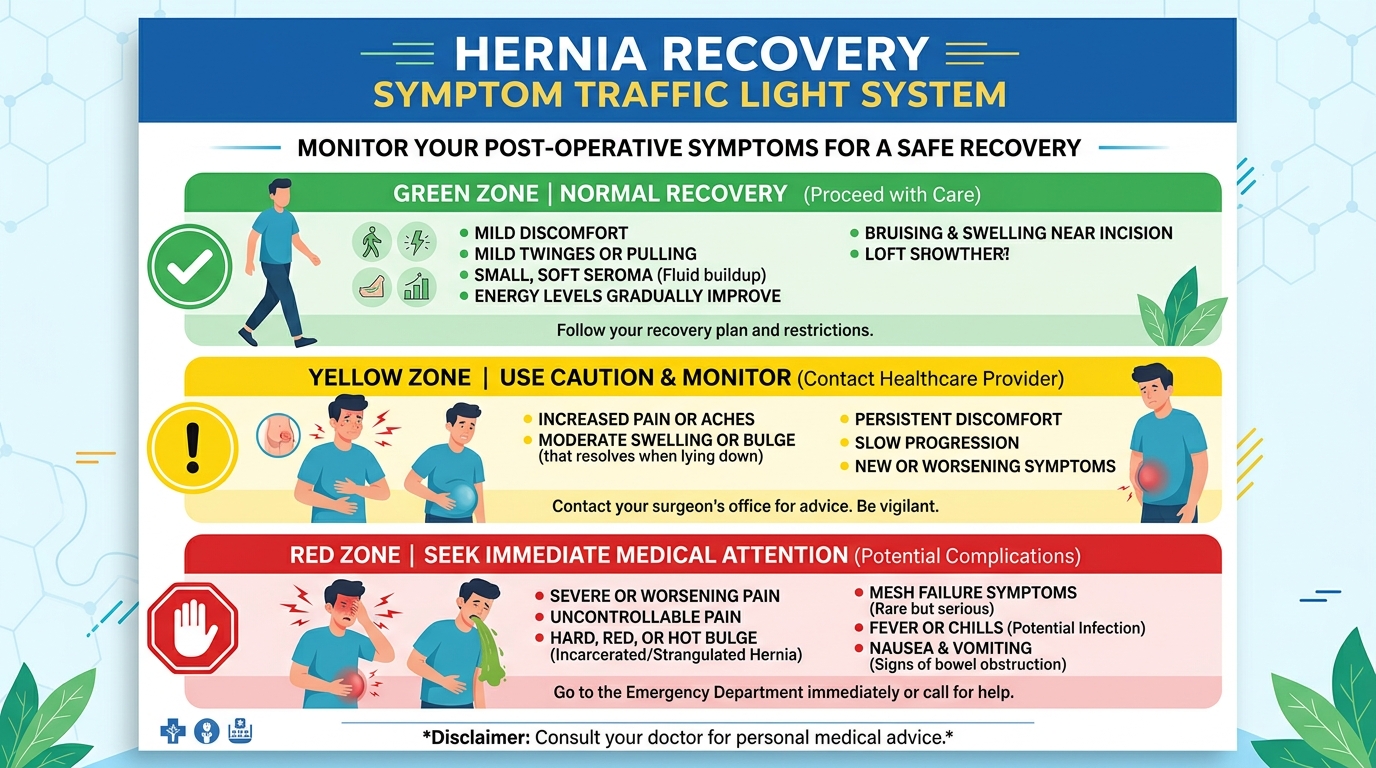
Figure 2: Clinical Symptom Traffic Light: Green Zone (Safe Healing), Yellow Zone (Caution & Monitor), and Red Zone (Immediate Medical Attention).
Peer-Reviewed Scientific References & Clinical Guidelines
- HerniaSurge Group. (2018). International guidelines for groin hernia management. Annals of Surgery, 268(1), 195–201. [PubMed PMID: 29379841].
- Society of American Gastrointestinal and Endoscopic Surgeons (SAGES). (2010). Guidelines for laparoscopic ventral and incisional hernia repair. Surgical Endoscopy, 24(9), 2096–2107. [PubMed PMID: 20490558].
- Simons, M. P., et al. (2009). European Hernia Society guidelines on the treatment of inguinal hernia in adult patients. Hernia, 13(4), 343–403. [PubMed PMID: 19636493].
- Luijendijk, R. W., et al. (2000). A comparison of suture repair with mesh repair for incisional hernia. The New England Journal of Medicine, 343(6), 392–398. [PubMed PMID: 10933738].
- Cobb, W. S., et al. (2005). The argument for mesh in ventral hernia repair. The American Surgeon, 71(9), 718–724. [PubMed PMID: 16463926].
- Cobb, W. S., et al. (2005). Normal human intra-abdominal pressure. Journal of Surgical Research, 129(2), 231–235. [PubMed PMID: 16187042].
- Deeken, C. R., & Lake, S. P. (2017). Mechanical properties of the abdominal wall and biomaterials utilized for hernia repair. Journal of the Mechanical Behavior of Biomedical Materials, 74, 411–427. [PubMed PMID: 28734262].
- Vaughn, Z. D., et al. (2011). Driving performance after right lower extremity surgical procedures. The American Journal of Sports Medicine, 39(12), 2686–2690. [PubMed PMID: 21908722].
- Bittner, R., et al. (2011). Guidelines for laparoscopic (TAPP) and endoscopic (TEP) treatment of inguinal hernia [International Endohernia Society (IEHS)]. Surgical Endoscopy, 25(9), 2773–2843. [PubMed PMID: 21751060].
- Sanders, D. L., et al. (2014). Postoperative seroma formation after open and laparoscopic repair of abdominal hernias: a systematic review. Hernia, 18(6), 787–796. [PubMed PMID: 24771291].
- Heniford, B. T., et al. (2003). Laparoscopic repair of ventral hernias: nine years' experience with 850 consecutive hernias. Annals of Surgery, 238(3), 391–400. [PubMed PMID: 14501505].
- National Institutes of Health (NIH). (2022). Inguinal Hernia: Diagnosis and Post-Operative Management. National Institute of Diabetes and Digestive and Kidney Diseases (NIDDK). NIH Publication No. 19-DK-1024.
- Center for Disease Control and Prevention (CDC). (2017). Guideline for the Prevention of Surgical Site Infection. JAMA Surgery, 152(8), 784–791. [PubMed PMID: 28467526].